
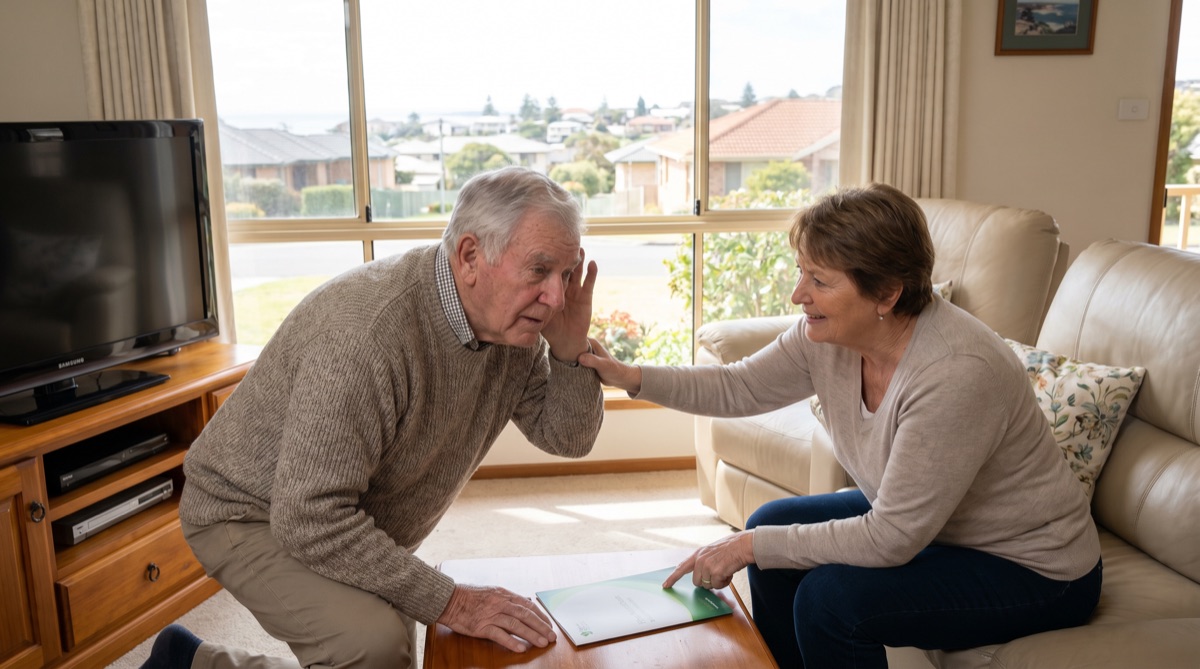
Hearing changes gradually for most people — so gradually that many Australians live with reduced hearing for years before doing anything about it. If you have been noticing that conversations feel harder to follow, or that people around you seem to be mumbling more than they used to, a hearing test can give you a clear, factual picture of where things stand.
Common signs that a hearing test may be worthwhile include regularly asking people to repeat themselves, difficulty following conversations in noisy places, turning the TV up louder than others prefer, missing sounds like doorbells or birdsong, and finding phone calls harder to hear. A qualified audiologist can assess your hearing and discuss any findings with you.
Why Hearing Changes Happen
Hearing can change for many reasons. Age-related hearing change — sometimes called presbycusis — is the most common cause in adults over 50, and it tends to affect the higher-pitched sounds first. Noise exposure over a working lifetime, certain medications, ear infections, earwax build-up, and family history can all play a role as well. Because the process is usually slow, people often adapt without noticing how much effort hearing has started to take.
A hearing test is a straightforward, non-invasive assessment. It does not diagnose medical conditions, but it gives an audiologist the information needed to understand your hearing profile and talk through any options that may suit your situation.
How Do You Know It Is Time?
Are You Asking People to Repeat Themselves — Regularly?
Occasionally asking someone to repeat themselves is perfectly normal. When it becomes a daily pattern — particularly in one-on-one conversations in quiet rooms — that is worth paying attention to. If you find yourself saying "pardon?" or "sorry, what was that?" many times throughout the day, your hearing may have shifted.
Do Conversations in Noisy Environments Feel Exhausting?
Restaurants, family gatherings, social events — these settings are challenging for many people with hearing change. The ability to separate speech from background noise is often one of the first things to be affected. If you dread noisy social situations, or leave them feeling mentally drained, it is worth considering whether your hearing is making those situations harder than they need to be.
Is the TV Volume a Point of Tension at Home?
A very common sign — often noticed by a partner or family member before the person themselves — is the television volume creeping up over time. If others in your home comment that it is too loud, or if subtitles have gone from optional to essential, that pattern is worth discussing with an audiologist.
Are You Missing Sounds You Used to Hear?
High-pitched sounds are typically the first to go with age-related hearing change. This might mean missing birdsong in the morning, not hearing the kettle click off, struggling to hear the doorbell from another room, or losing track of higher-pitched voices — including those of grandchildren. These can seem like small things individually, but together they paint a picture.
Do Phone Calls Feel Harder Than Face-to-Face Conversations?
Phone calls remove the visual cues — lip movement, facial expressions, body language — that many people rely on more than they realise. If phone calls have become noticeably more difficult, that can be an early indicator of hearing change.
Has Anyone in Your Family Mentioned It?
People close to you often notice a change before you do. If a partner, adult child, or friend has commented on your hearing — even gently or in passing — it is worth taking seriously. It is not unusual for the people around someone to observe the pattern before the individual themselves becomes aware of it.
Have You Been Around Significant Noise Over Your Lifetime?
People who have worked in loud industries — construction, manufacturing, farming, mining, transport, the military — or who have spent years at live music events or using loud machinery without consistent hearing protection, can develop noise-induced hearing loss. This type of hearing change is often permanent, and may not become obvious until later in life. If this applies to you, a hearing assessment is a sensible step regardless of whether you are currently noticing symptoms.
Signs That Warrant Prompt Attention
Some hearing changes are worth discussing with a GP or audiologist sooner rather than later. These include:
- Sudden hearing loss in one or both ears (this should be assessed urgently — do not wait)
- Hearing loss accompanied by dizziness, vertigo, or balance problems
- Ringing, buzzing, or humming in your ears (tinnitus) that has started recently or worsened
- Hearing loss in one ear only, or where one ear seems noticeably different from the other
- Ear pain, discharge, or a feeling of fullness that persists
None of these necessarily indicate something serious, but they are situations where professional assessment is particularly important.
How Often Should You Have a Hearing Test?
Current general guidance suggests adults over 50 — particularly those with any of the risk factors above — consider a baseline hearing assessment if they have not had one, and then periodic checks every two to three years, or sooner if they notice any change. Your audiologist can advise on what makes sense for your individual circumstances.
Eligible pensioners and veterans may be able to access a hearing assessment funded through the Australian Government Hearing Services Program. Your audiologist can help determine whether you qualify.
What to Expect from a Hearing Test
A hearing assessment at an audiology clinic is straightforward and comfortable. It typically involves:
- A conversation about your hearing history, lifestyle, and any concerns
- A look inside your ear canal (otoscopy) to check for wax build-up or other visible issues
- Pure-tone audiometry — listening to a series of tones through headphones and indicating when you hear them
- Sometimes, speech testing to assess how well you process words in quiet or with background noise
The whole appointment generally takes around 45 to 60 minutes. You will receive a copy of your audiogram (the graph of your hearing results), and the audiologist will walk you through what it shows.
Frequently Asked Questions
Q: Can I check my own hearing at home before booking a test? Online hearing checks and smartphone apps can give a very rough indication, but they are not a substitute for a proper clinical assessment. Headphone quality, device volume settings, and background noise all affect the result. An audiologist uses calibrated equipment in a sound-treated environment for accurate results.
Q: My hearing seems fine in quiet rooms — do I still need a test? Difficulty hearing in noise while managing well in quiet is actually a very common early presentation of hearing change. It is worth having a formal assessment to understand where your hearing is across different frequencies and situations.
Q: I am only in my 40s — can I still develop hearing loss? Yes. While age-related hearing change typically becomes more noticeable from the 50s onward, noise-induced hearing loss, certain health conditions, and other factors can affect hearing at any age. If you are noticing signs, age is not a reason to dismiss them.
Q: Is a hearing test covered under Medicare or private health? Medicare does not typically cover hearing assessments for adults, but eligible pensioners and veterans can access services through the Australian Government Hearing Services Program. Some private health extras policies include a hearing benefit — it is worth checking your policy details. Your audiologist can help clarify what options may apply to you.
Q: What if the test shows I have some hearing loss — what happens next? An audiologist will explain your results and discuss what they mean for your day-to-day life. Options and next steps vary widely depending on the degree and type of hearing change. There is no pressure to make any decisions on the spot — the assessment is simply about understanding where things stand.
Taking the Next Step
If any of the signs above feel familiar, the most helpful thing you can do is book a hearing assessment with a qualified audiologist. It is a low-effort, comfortable appointment — and having accurate information about your hearing puts you in a much better position to make decisions that suit your life.
If you live on the Redcliffe Peninsula or in the Moreton Bay region, the team at Hearing Help would be happy to assist. Get in touch to arrange an assessment at a time that works for you.