

Types of Hearing Aids — Styles, Features and What to Consider
Hearing aids come in several distinct styles, ranging from devices that sit behind the ear to very small ones that sit entirely inside the ear canal. Each style has different characteristics in terms of size, how sound is delivered, battery type, and ease of handling. The style that works best for any individual depends on their hearing profile, ear anatomy, lifestyle, and personal preferences — your audiologist will help guide that conversation.
A Note Before You Start
No hearing aid style is universally "the best." What works well for one person may not suit another. The information below is intended to help you become familiar with the options so you can have a more informed conversation with your audiologist. Hearing aid technology changes regularly, and what is available to you will depend on current offerings from multiple manufacturers.
Hearing Help is an independent clinic, meaning we are not aligned with or contracted to any single brand. This allows us to discuss a wide range of devices across different manufacturers and price points.
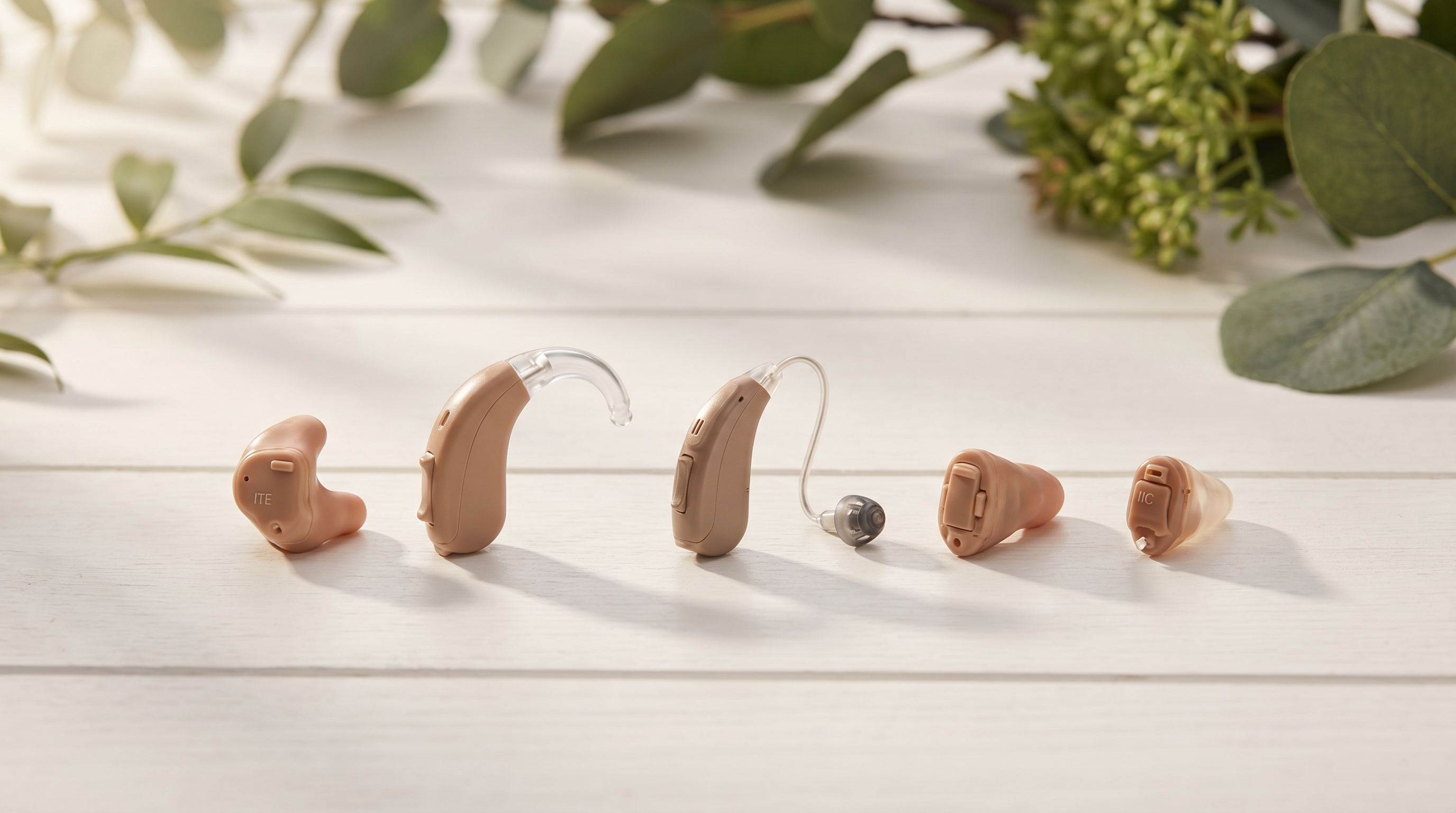
The Main Hearing Aid Styles
BTE — Behind-the-Ear
A BTE hearing aid sits in a small casing that rests behind the ear. Sound is processed in the casing and delivered into the ear canal through a thin tube connected to a custom-moulded earmould or a standard dome tip.
Characteristics:
Typically the largest style, though modern BTE devices are considerably more compact than older versions
Earmould or dome sits inside the ear canal; the processing unit sits behind the ear
Generally easier to handle than smaller devices — useful for people who prefer larger controls
Can accommodate a wider range of hearing difficulty levels
Rechargeable and disposable battery versions are available
Some people find them comfortable to wear with glasses; others prefer a different style — this is worth discussing with your audiologist
BTE devices are widely used and come in a range of sizes and power levels.
RIC / RITE — Receiver-in-Canal or Receiver-in-the-Ear
A RIC (also called RITE) device is similar in concept to a BTE in that the main processing unit sits behind the ear. The key difference is that the receiver (the component that delivers sound) sits inside the ear canal itself, connected to the behind-the-ear unit by a thin wire.
Characteristics:
Smaller and more discreet than a traditional BTE for many wearers
The thin wire and small dome tip is less visible than a full earmould for some styles
Direct placement of the receiver in the ear canal can, for some people, contribute to a more natural sound quality — though individual experience varies
Suitable for a broad range of hearing profiles
Rechargeable versions are widely available in this style
The receiver in the ear canal is exposed to moisture and earwax, which means it requires regular care and occasional replacement
RIC devices are among the most commonly fitted styles in Australia at present.
ITE — In-the-Ear
An ITE hearing aid is custom-made to fit within the outer portion of the ear (the bowl-shaped area called the concha). The entire device — microphone, processor, and receiver — sits in the ear.
Characteristics:
Custom-made from an impression of your ear, so it fits your ear specifically
No component sits behind the ear, which some wearers prefer
Larger than canal-worn styles, which can make the controls easier to manage for some people
Visible in the ear, though some people prefer the look of an in-ear device
Not as discreet as smaller canal styles
May be less suitable for severe or profound hearing difficulty (though this depends on the specific device and individual hearing profile)
ITE devices may suit people who find behind-the-ear components uncomfortable, or who want something custom-fitted but easier to handle than smaller styles.
ITC — In-the-Canal
An ITC device is a smaller, custom-made device that sits mostly inside the ear canal, with a small portion visible at the canal opening.
Characteristics:
More discreet than a full ITE
Custom-made from an ear impression
Smaller controls than ITE devices — may require more dexterity to handle
Some ITC models include wireless connectivity features; availability varies by manufacturer and model
May not be suitable for all ear canal shapes or all levels of hearing difficulty
CIC — Completely-in-Canal
A CIC device is a small, custom-made hearing aid that sits deep within the ear canal, with little or nothing visible at the canal entrance.
Characteristics:
Among the most discreet styles available
Entirely custom-made from an ear impression
Very small size means the controls are minimal — volume adjustments are often managed via an app
No space for rechargeable batteries in most CIC models; typically uses small disposable batteries
Requires good dexterity to insert and remove — the small size can make handling challenging for some people
May not be suitable for people with narrow ear canals, significant earwax build-up, or more significant levels of hearing difficulty
CIC devices suit people for whom discretion is a primary consideration and who are comfortable managing very small devices.
IIC — Invisible-in-Canal
An IIC device is the smallest custom hearing aid style. It sits so deep in the ear canal that it is very discreet and difficult for others to see when worn.
Characteristics:
Extremely discreet
Inserted and removed using a small pull cord
As with CIC, requires good dexterity and regular care
Suitable for a narrower range of hearing profiles and ear canal sizes
Your audiologist will advise whether your ear canal anatomy and hearing profile are suitable for this style
Key Features to Consider
Beyond the physical style, hearing aids vary considerably in the technology they use. Some features that may be relevant to your situation include:
Rechargeable vs. disposable batteries Rechargeable devices are placed in a charging case overnight. Disposable battery devices use small zinc-air batteries that need to be replaced regularly. Some people strongly prefer one over the other — this is worth raising with your audiologist.
Wireless connectivity Many modern hearing aids can connect to smartphones, televisions, and other devices via Bluetooth or similar technology. This can be useful for phone calls, streaming audio, and managing settings via an app. Connectivity features vary by manufacturer and model.
Directional microphones Most contemporary hearing aids include microphone systems designed to help focus on sounds in front of the wearer in noisy environments. How effective these features are in practice varies by device and individual.
Tinnitus features Some hearing aids include built-in sound generation features that some people with tinnitus find useful as part of a broader support approach. Your audiologist can discuss whether this is relevant for you.
Remote support Some clinicians offer the ability to make hearing aid adjustments remotely, which can be convenient for follow-up fine-tuning.
How Does an Audiologist Help You Choose?
Your audiologist will consider a range of factors when discussing styles and devices with you:
Your hearing profile — the type and degree of hearing difficulty, as shown on your audiogram
Ear anatomy — the shape and size of your ear canal affects what styles are physically suitable
Lifestyle — how active you are, the listening environments you spend most time in (quiet rooms, noisy workplaces, social gatherings), and whether you frequently use a phone or television
Dexterity and vision — smaller devices require more manual dexterity to handle and maintain
Budget and funding — what is available through the Hearing Services Program, private health insurance, or your own budget
Personal preference — your feelings about visibility, comfort, and features all matter
There is rarely one "correct" answer. Your audiologist will explain the trade-offs of different options and help you find a starting point that suits your individual circumstances. Many people find their preferences evolve over time as they become more comfortable with their devices.
Discuss Your Options With an Audiologist
Understanding the range of hearing aid styles is a useful starting point, but the right fit for you is something an audiologist can only determine after a proper assessment and a conversation about your individual needs and preferences.
Hearing Help is an independent audiology clinic on the Redcliffe Peninsula. We offer a comprehensive range of hearing aids across multiple manufacturers, through both private and Hearing Services Program pathways. Get in touch to book an assessment or to ask any questions.
/ Your Hearing Journey /
Caring for your hearing, every step of the way
Book
- No referral needed
- Choose a time that suits
- Quick and easy
Assess
- Comprehensive hearing test
- Plain-English results
- No pressure, ever
Discuss
- All major brands considered
- Matched to your lifestyle
- Impartial, independent advice
Support
- Fitting and fine-tuning
- Repairs and maintenance
- Ongoing aftercare
/ Frequently Asked Questions /
A Closer Look At
Types of Hearing Aids — Styles, Features and What to Consider

Common questions
What styles of hearing aids are available?
The main styles are Behind-The-Ear (BTE), Receiver-In-Canal (RIC), In-The-Ear (ITE), In-The-Canal (ITC) and Completely/Invisible-In-Canal (CIC/IIC). Each suits different needs and levels of hearing loss.
Which style is best for me?
It depends on your hearing, ear shape, dexterity and lifestyle. Your audiologist helps match a style and technology level to what will work best for you — there's no single 'best' for everyone.
Are smaller hearing aids always better?
Not necessarily. Smaller devices are more discreet but can be harder to handle and may suit fewer hearing profiles. The right choice balances discretion with performance and comfort for you.
What's the difference between BTE and RIC styles?
Both sit behind the ear, but a Receiver-In-Canal (RIC) places the speaker inside the ear canal for a more discreet look, while a Behind-The-Ear (BTE) houses everything in the unit behind the ear.
Are in-the-ear styles suitable for everyone?
Not always — they depend on your ear shape, the degree of hearing loss and how easily you can handle small devices. We help you find a style that works for you.
Do all hearing aid styles connect to phones?
Many modern hearing aids offer wireless streaming to phones and TVs, though this varies by style and model. We can show you the connectivity options.
Can you help me decide which type suits me?
Yes — after your assessment we discuss the styles that match your hearing, lifestyle and dexterity so you can choose with confidence.
Book a hearing test
No referral needed. Newport Marketplace, Tenancy M01, 10 Lakeview Promenade, Newport QLD 4020.