

Rechargeable Hearing Aids Explained
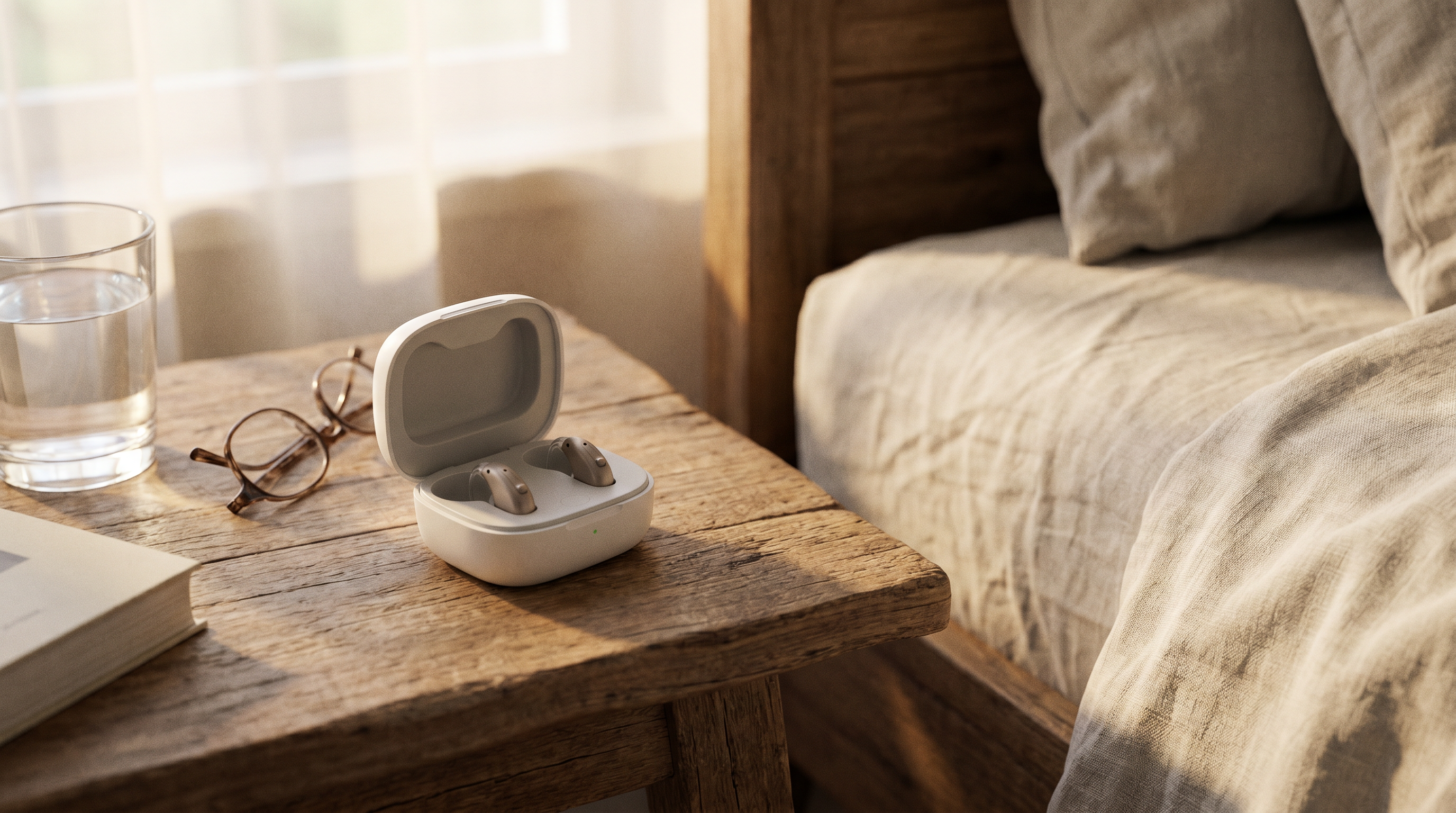
Rechargeable hearing aids have become one of the most commonly asked-about features when people begin exploring their options. They do away with the need to handle and replace small disposable batteries — but like any technology, they come with trade-offs worth understanding before you decide. This guide covers how they work, the advantages and limitations, and the factors that may make them a good or less ideal fit for different people.
How Do Rechargeable Hearing Aids Work?
Modern rechargeable hearing aids use lithium-ion battery technology — the same chemistry found in smartphones and laptops. The hearing aid charges in a dedicated charging case, typically overnight or for a few hours, and then operates throughout the day on a single charge.
Charging cases vary by manufacturer and model:
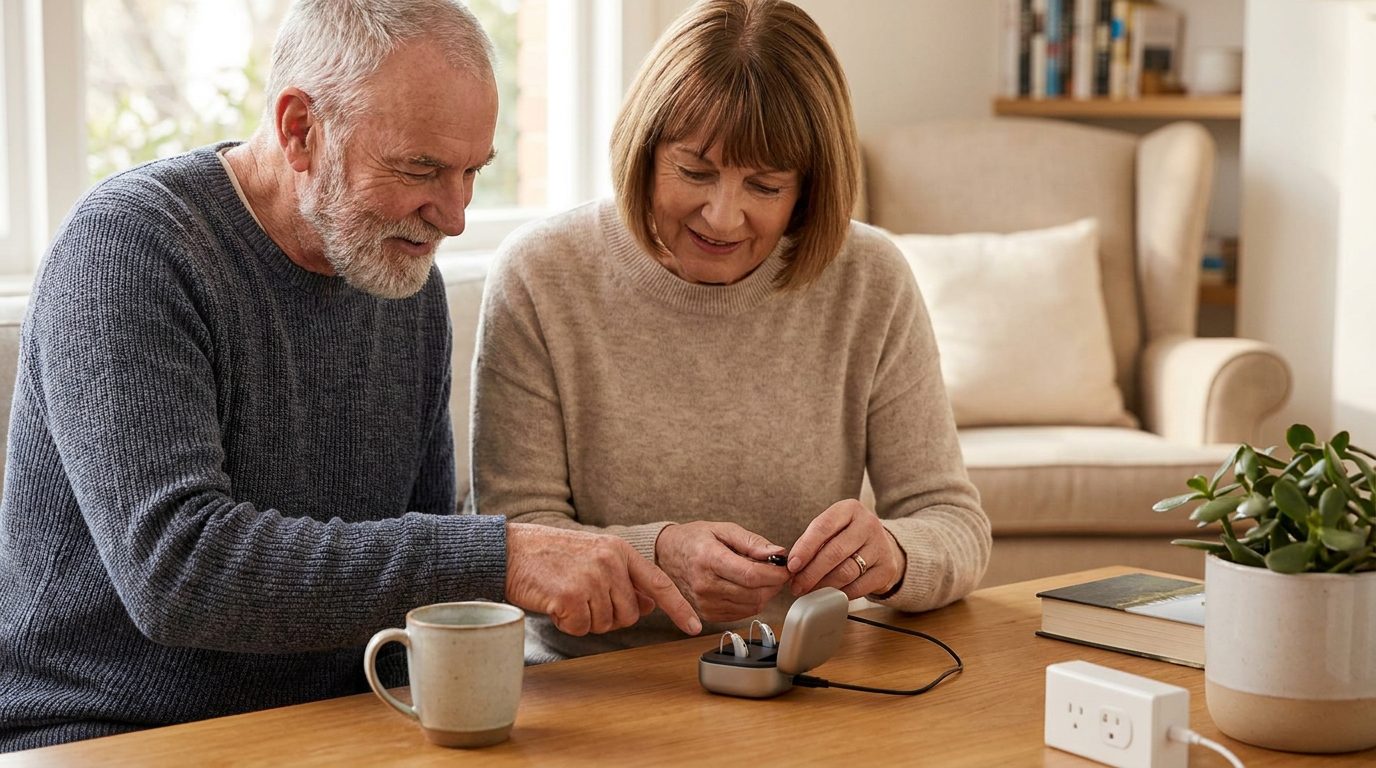
Standard charging cases — plug into a power source via USB or a wall adapter; the hearing aids sit in the case and charge passively
Portable charging cases — include a built-in battery, allowing you to charge the hearing aids away from a power outlet, similar to a wireless earphone charging case
Drying and charging cases — some models combine overnight drying (to remove moisture and extend device life) with charging
The charging contacts are usually on the base of each hearing aid, so you simply place the device into its slot — there are no small pins or connectors to align.
Most rechargeable hearing aids reach a full charge in three to four hours and are designed to run for approximately 16 to 24 hours on a single charge, though real-world battery life varies depending on factors such as streaming usage, processor load, and the specific model.
What Are the Advantages?
No Small Batteries to Handle
Disposable zinc-air batteries — the type used in traditional hearing aids — are small, typically around 6mm to 12mm in diameter depending on the hearing aid size. For people with reduced dexterity, arthritis, or vision changes, opening a battery door, removing a spent battery, peeling the tab from a fresh one, and inserting it correctly can be genuinely difficult. Rechargeable models eliminate this task entirely.
Predictable Daily Routine
For many people, the overnight charging routine becomes simply that — a routine. Hearing aids go on the charger before bed and are ready in the morning, much like a phone. There is no need to carry spare batteries, monitor battery level warnings, or make an unplanned trip to a chemist.
Lower Long-Term Running Costs
Disposable hearing aid batteries are an ongoing expense — depending on the hearing aid size and how many hours per day the aids are used, batteries may need replacing every one to two weeks per aid. Over the life of a pair of hearing aids (typically five to seven years), the cumulative cost of disposable batteries adds up. Rechargeable models have no per-battery cost during the charging phase.
Environmental Consideration
Fewer batteries discarded over time means a reduced environmental footprint from battery waste — a consideration that is meaningful to some people.
What Are the Limitations?
Dependence on a Charging Source
If you forget to charge your hearing aids overnight, or if the power goes out, you will have no fallback option other than waiting for them to charge. With disposable battery aids, a spare battery in your wallet solves the problem immediately. This is a real practical consideration for people who travel frequently, camp, or live in areas with unreliable power.
Some manufacturers offer portable charging cases that address this — they hold additional charge for use away from a power outlet — but this adds cost and an additional item to carry.
Battery Degradation Over Time
Lithium-ion batteries degrade with charge cycles over time. The same is true of smartphones — after several years, the battery may not hold as much charge as it did when new. Most hearing aid manufacturers account for this in their design, but it is worth being aware that battery performance may gradually change over the life of the device.
In most cases, rechargeable hearing aids are not designed for the user to replace the internal battery themselves — this is a service that would typically be handled by the audiologist or the manufacturer.
Not Always Available in Every Style
Rechargeable technology is not universally available across all hearing aid styles. Smaller devices — such as completely-in-canal (CIC) and invisible-in-canal (IIC) styles — often rely on disposable batteries due to size constraints. If a very discreet style is a priority for you, it is worth checking whether a rechargeable version is available in the specific model being considered.
Streaming Can Reduce Run Time
If you stream audio frequently — music, phone calls, or television through your hearing aids — expect battery life to be shorter than the advertised maximum. Streaming places additional demand on the processor and wireless transmitter. For heavy streamers, this is worth factoring into the decision.
Who May Find Rechargeable Aids Particularly Useful?
There is no universal answer, but rechargeable hearing aids tend to suit people who:
Have difficulty handling small objects due to dexterity issues, arthritis, or vision changes
Prefer a simple, consistent daily routine without the need to manage battery supply
Do not travel extensively to remote areas where charging may be difficult
Are comfortable with technology and already charge devices daily
Have young children, grandchildren or pets: Disposable hearing aid batteries are small button batteries and can be extremely dangerous if swallowed. They can also be easily dropped and may roll out of sight, making them difficult to find. Rechargeable hearing aids can reduce the need to regularly handle and replace disposable button batteries, as the rechargeable battery is enclosed within the hearing aid. For parents, grandparents and pet owners, button-battery safety is therefore an important consideration when discussing which hearing aid options may best suit their individual needs and lifestyle.
Rechargeable aids may be less convenient for people who:
Travel frequently and may not always have access to a power outlet
Prefer the reassurance of an instant fix (a spare battery) if something runs flat
Are interested in very small, discreet styles that may only be available with disposable batteries
A Practical Note on the Trial Period
If you are unsure whether rechargeable or disposable suits you, a trial period is your best tool. Many audiology clinics, including Hearing Help, offer the opportunity to trial hearing aids in your daily life before committing. Trialling over several weeks — across your typical routine, social activities, and any travel — gives you a genuine sense of how the technology fits your life.
Do not rely solely on in-clinic impressions. The day-to-day reality of living with hearing aids is best assessed in your own home, in your regular environments.
Discussing Your Options at Hearing Help
Choosing between rechargeable and disposable is just one of the conversations you will have during a good hearing aid consultation. At Hearing Help, we take the time to understand how you live your life — so that the advice we offer is based on what will genuinely work for you, day to day.
As an independent clinic, we are not tied to any single manufacturer, which means our recommendations are shaped by your needs rather than a product catalogue.
Contact Hearing Help on the Redcliffe Peninsula to book a hearing assessment and explore your options.
/ Your Hearing Journey /
Caring for your hearing, every step of the way
Book
- No referral needed
- Choose a time that suits
- Quick and easy
Assess
- Comprehensive hearing test
- Plain-English results
- No pressure, ever
Discuss
- All major brands considered
- Matched to your lifestyle
- Impartial, independent advice
Support
- Fitting and fine-tuning
- Repairs and maintenance
- Ongoing aftercare
/ Frequently Asked Questions /
A Closer Look At
Rechargeable Hearing Aids Explained
Common questions
How long does a charge last?
Most modern rechargeable hearing aids are designed to last a full day on an overnight charge, though real-world battery life varies with use and features like streaming.
Are rechargeable aids better than battery ones?
They suit many people — no fiddly batteries and easy overnight charging — but disposable-battery models still suit others. We'll talk through which fits your routine and dexterity.
What if I forget to charge them?
Most chargers offer a quick top-up that gives you several hours from a short charge. We'll explain the options for the specific devices we discuss with you.
How long do the built-in batteries last before replacement?
Rechargeable batteries are built in and typically last several years before they need replacing. We advise you on this over the life of your devices.
Can I stream audio with rechargeable hearing aids?
Many rechargeable models support wireless streaming from phones and TVs. We can show you which options offer the features you want.
Are rechargeable hearing aids suitable for significant hearing loss?
Many rechargeable devices suit a wide range of hearing losses. We'll confirm what's appropriate for your assessment results.
How do I look after rechargeable hearing aids?
Charge them overnight, keep them dry and clean, and store them in their charger. We'll walk you through the simple daily routine.
Book a hearing test
No referral needed. Newport Marketplace, Tenancy M01, 10 Lakeview Promenade, Newport QLD 4020.