

How a Hearing Test Works

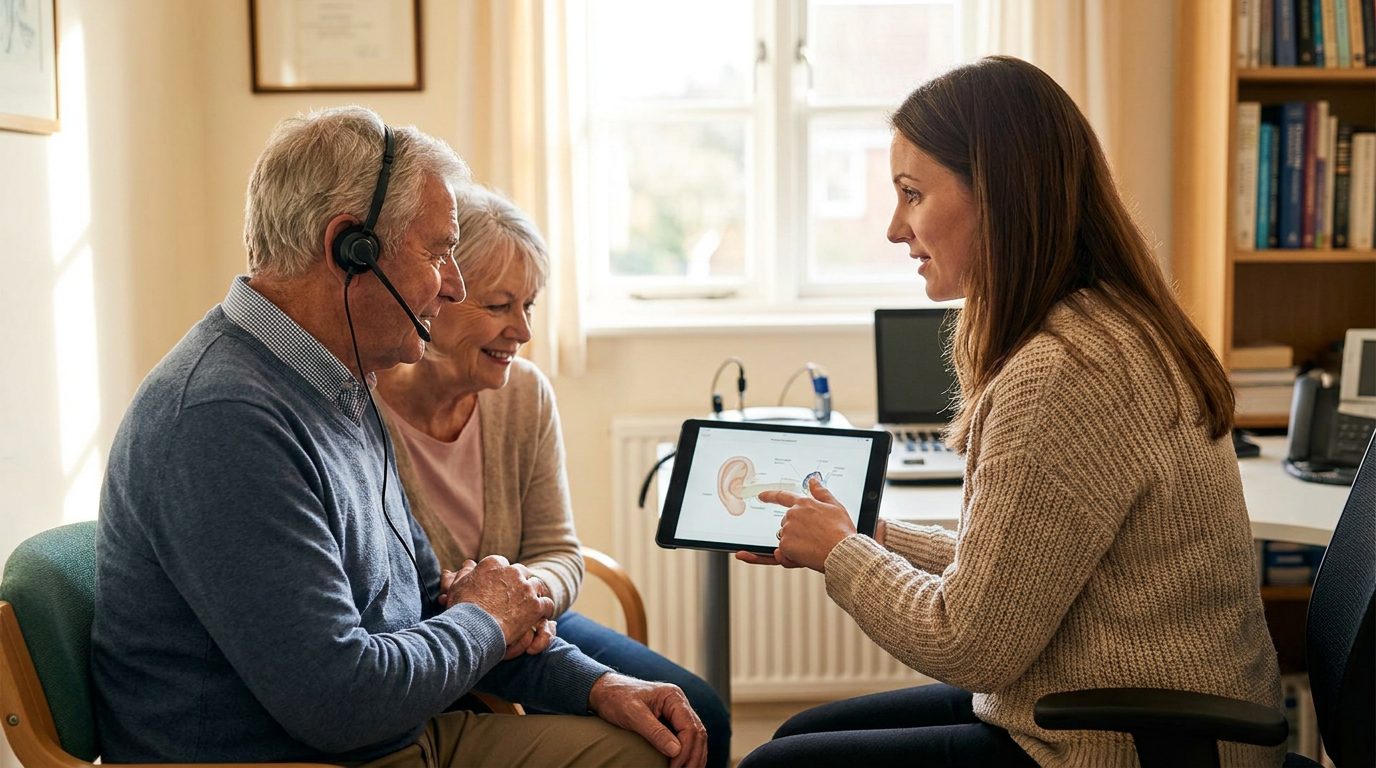
A hearing test — also called a hearing assessment or audiological evaluation — is a comfortable, non-invasive appointment that typically takes 45 to 90 minutes. An audiologist guides you through a series of simple listening tasks and checks, then explains what the results mean for you and answers any questions you have.
Why Would Someone Have a Hearing Test?
People come in for a hearing assessment for all sorts of reasons. You might have noticed that conversations are harder to follow in noisy places, or that you need the television louder than other people in the room prefer. A family member might have mentioned they have to repeat themselves often. Sometimes there is a gradual ringing or buzzing sound that is hard to ignore.
Other people book an appointment simply because they have not had their hearing checked in a while and want a baseline measure — much like getting eyes tested routinely.
There is no single "right" reason to have your hearing assessed. If something has prompted a question in your mind, booking an appointment is a sensible next step.
What Happens Before the Test
Booking Your Appointment
When you contact Hearing Help, the team will ask a few brief questions — your age, any specific concerns, and whether you hold a pensioner concession card or DVA card, as this may affect your eligibility for government-subsidised services.
You do not need a referral from a GP to book a private hearing assessment, though a referral is required for some government-funded appointments.
What to Bring
Your Medicare card
Pensioner concession card or DVA card if applicable
A list of any medications you are currently taking
A friend or family member if you would like support (many people find this helpful)
Step-by-Step: What Happens During a Hearing Assessment
Step 1 — Case History
Your audiologist will sit down with you and ask about your hearing health background. This includes:
When you first noticed any changes
Whether the difficulty is in one ear or both
Your work history and any exposure to loud noise over the years
Any family history of hearing difficulty
General health and current medications
This conversation helps the audiologist understand your individual situation before any testing begins. It usually takes around 10 to 15 minutes.
Step 2 — Otoscopy (Looking in the Ears)
The audiologist uses a small, lighted instrument called an otoscope to look inside each ear canal. This checks for:
Earwax build-up
Signs of infection or inflammation
The condition of the eardrum
This part takes only a minute or two and is completely non-invasive.
Step 3 — Pure Tone Audiometry
This is the main hearing test most people are familiar with. You will sit in a quiet room or booth and wear a pair of headphones (or small earphones placed in the ear canal). The audiologist plays a series of tones at different pitches and volumes through the headphones.
When you hear a tone, you press a button or raise your hand. There are no right or wrong answers — the audiologist is simply finding the softest sound you can detect at each pitch.
The results are recorded on a chart called an audiogram, which maps your hearing at different frequencies. Your audiologist will explain what this means in plain language when the test is complete.
Step 4 — Bone Conduction Testing (if required)
In some cases, the audiologist places a small vibrating device behind the ear rather than using headphones. This sends sound vibrations through the bone directly to the inner ear, bypassing the ear canal and middle ear. The comparison between air conduction and bone conduction results helps identify the type and location of any hearing difficulty.
Step 5 — Speech Testing
You may be asked to repeat back words or sentences at different volume levels. This helps the audiologist understand not just whether you can hear sounds, but how clearly you can distinguish speech — which is often what matters most in day-to-day life.
Step 6 — Tympanometry (Middle Ear Testing)
A small, soft probe is placed gently at the entrance to the ear canal. It produces a low tone and measures how the eardrum and middle ear system respond to slight changes in air pressure. This checks for fluid behind the eardrum or other middle ear conditions.
Step 7 — Results and Discussion
Once all tests are complete, your audiologist will go through the results with you. They will explain:
What the audiogram shows about your hearing at different frequencies
Whether any follow-up is recommended
What options may be relevant to your situation
If hearing aids or other support could be helpful, your audiologist will explain the range of options available and answer your questions. There is never any obligation to make a decision on the day.
How Long Does a Hearing Test Take?
A comprehensive adult hearing assessment typically takes between 45 and 90 minutes from start to finish, including the discussion at the end. It is worth setting aside a full hour so you do not feel rushed.
Does a Hearing Test Hurt?
No. The tests used in a comprehensive hearing assessment are non-invasive and comfortable. Nothing enters the ear canal beyond a soft probe tip or earphone. There are no injections, no bright lights, and no discomfort.
What Does the Audiogram Mean?
The audiogram is a graph showing your hearing threshold — the softest sound you could detect — at several different pitches. The horizontal axis shows frequency (from low-pitched sounds on the left to high-pitched sounds on the right). The vertical axis shows volume in decibels (dB), with softer sounds at the top and louder sounds lower down.
Your audiologist will explain exactly what your results mean for you, as individual hearing profiles vary considerably. The same audiogram can affect two people's daily lives quite differently depending on their lifestyle, occupation, and the listening situations they encounter most often.
Take the First Step
If you have been wondering about your hearing — or if someone close to you has raised the topic — a comprehensive hearing assessment is a straightforward way to get answers.
Hearing Help serves the Redcliffe Peninsula and Moreton Bay region. Our team is happy to answer any questions before you book. Get in touch to find a time that suits you.
/ Your Hearing Journey /
Caring for your hearing, every step of the way
Book
- No referral needed
- Choose a time that suits
- Quick and easy
Assess
- Comprehensive hearing test
- Plain-English results
- No pressure, ever
Discuss
- All major brands considered
- Matched to your lifestyle
- Impartial, independent advice
Support
- Fitting and fine-tuning
- Repairs and maintenance
- Ongoing aftercare
/ Frequently Asked Questions /
A Closer Look At
How a Hearing Test Works
Common questions
Is a hearing test painful?
No. A hearing test is completely non-invasive and comfortable — you'll listen to tones and words through headphones and respond, with a few gentle checks of your ear and eardrum.
Will I get my results on the day?
Yes. Your audiologist explains your results with you at the same appointment, walks you through what they mean, and answers any questions before you leave.
How long does a hearing test take?
Usually about 45 to 90 minutes, depending on the tests involved and the time we spend talking through your results and options.
Do I need a referral for a hearing test?
No — you don't need a referral to book a private hearing test with us. If you'd like to claim a Medicare rebate you may need a GP referral first, so it's worth asking your GP.
What do the results of a hearing test show?
Your results are plotted on an audiogram that shows the softest sounds you can hear across different pitches. Your audiologist explains what this means for your hearing and everyday listening.
Should I do anything to prepare?
Not much — bring your Medicare card, any pensioner concession or DVA card, and note the situations where hearing feels harder so we can focus on what matters to you.
Can children have a hearing test?
Yes. We test both adults and children (from around age 3), adapting the approach to suit each person's age and needs.
Book a hearing test
No referral needed. Newport Marketplace, Tenancy M01, 10 Lakeview Promenade, Newport QLD 4020.