
Do you have hearing loss and live in Woody Point? It is more common than many people realise — and more manageable than many people fear.
Woody Point's tight-knit community and relaxed coastal lifestyle make connection easy. Hearing changes can make everyday conversations — over the fence, at the local cafe, or at a Sunday family lunch — more effortful than they used to be. If conversations feel harder to follow than they once did, your hearing is worth looking into.
When Hearing Loss Affects Daily Life
Hearing loss does not always feel dramatic. For most people, it shows up as small frustrations that accumulate over time:
Needing to ask "sorry?" or "what was that?" far more often than before
Feeling like you are hearing but not quite understanding — words that almost make sense but not quite
Turning the television up louder than your household prefers
Struggling to keep up with group conversations, especially when voices are talking over each other
Finding that noise — even background music — makes conversation feel nearly impossible
Preferring to stay quiet in conversation rather than risk mishearing and responding incorrectly
These experiences are real and they are significant. They are also the kinds of things that a professional hearing assessment is designed to help you understand and address.
The Role of Earwax in Hearing Difficulty
It is easy to underestimate how much a build-up of earwax can affect hearing. The ear canal naturally produces cerumen (earwax) to protect itself, but in some people it builds up faster than it clears — particularly in those who use cotton buds (which tend to push wax deeper), wear hearing aids, or have naturally narrow ear canals.
Symptoms of earwax build-up can include muffled hearing, a feeling of fullness in the ear, mild discomfort, or even tinnitus. These symptoms can be easy to mistake for more significant hearing loss.
Hearing Help offers microsuction earwax removal, which is widely regarded as one of the safest techniques for clearing impacted earwax. It uses gentle suction under magnification — no water, no syringe, and suitable for most people including those with hearing aids. If earwax is found to be a factor in your hearing difficulty, it can often be addressed at the same appointment as your assessment.
Age, Noise, and Other Causes of Hearing Loss
In adults over 50, the most likely cause of hearing difficulty is age-related change in the inner ear. This type of hearing loss — known as presbycusis — progresses slowly and tends to affect higher frequencies first. The practical result is that people often begin to find speech harder to follow before they notice problems with other sounds.
Past noise exposure is another common factor. If you worked in a noisy trade, farmed, drove heavy machinery, or had significant recreational noise exposure earlier in life, that history can show up in the way your hearing performs now.
A range of general health factors can also play a role in hearing changes over time. Your audiologist will take a full health history as part of your assessment, including any medications that may be relevant.
What Happens at Your Assessment Appointment
Hearing Help's comprehensive adult hearing assessment is a calm, methodical process that takes around an hour. You will not be rushed, and there are no surprises.
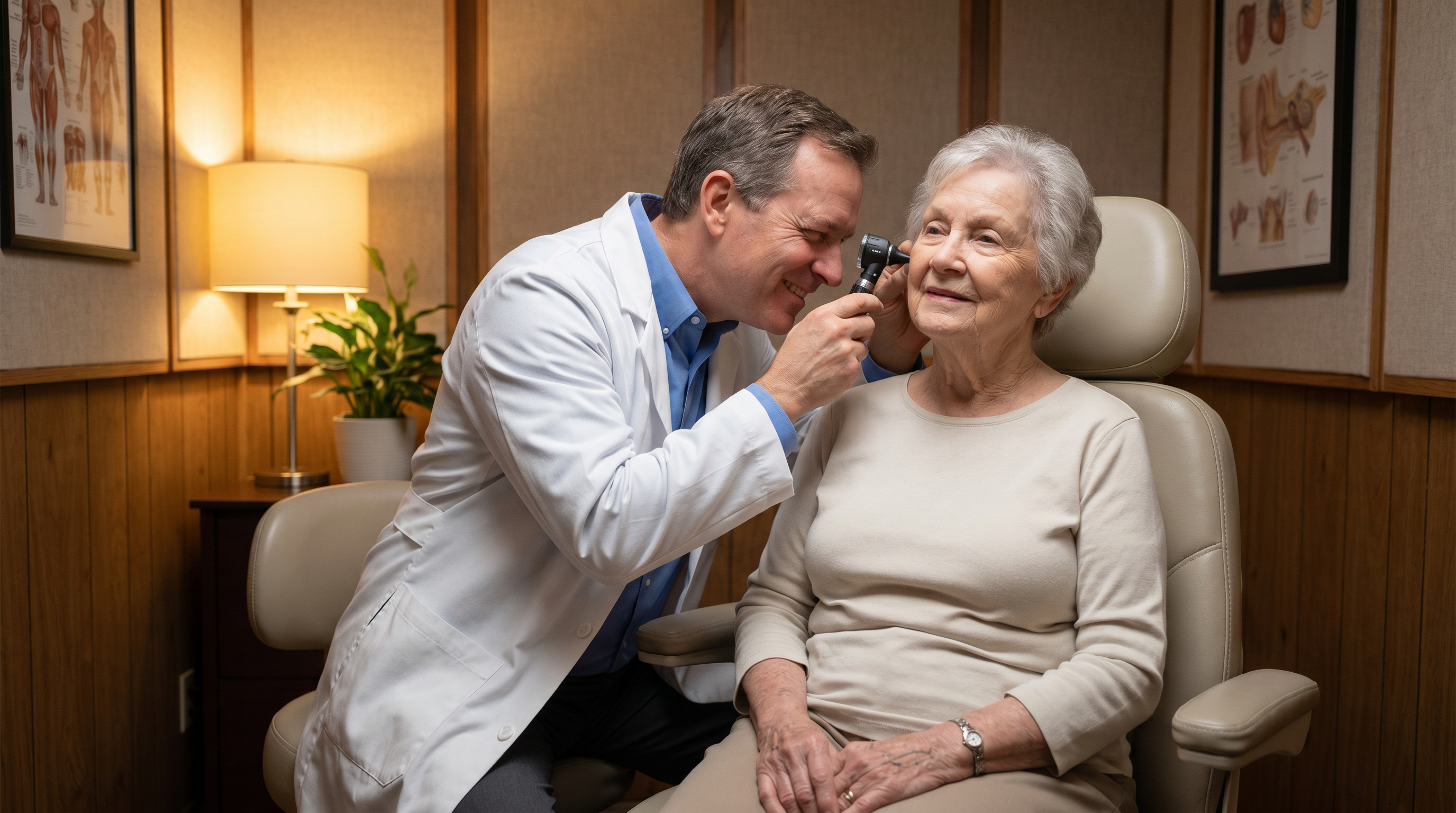
1. History and goals — your audiologist will take time to understand your specific hearing concerns, lifestyle, and health background 2. Otoscopy — a visual check of the outer ear and ear canal 3. Audiometry — a pure-tone hearing test using headphones and sometimes a bone-conduction headband, to distinguish between different types of hearing loss 4. Speech testing — assessing how well you understand spoken words at a comfortable listening level 5. Clear explanation of results — your audiologist will go through your audiogram with you and explain what it means in plain, practical terms
Whether or not hearing aids or any other support is relevant for you, you will leave with a much clearer understanding of your hearing.
What Hearing Aids Can and Cannot Do
If the assessment indicates that hearing aids may be helpful, your audiologist will explain the options available and be honest about what you can expect. Modern devices are smaller and more sophisticated than many people expect, and most are rechargeable and connect wirelessly to phones, tablets, and televisions.
What hearing aids cannot do is restore hearing to what it was. What they can do, when fitted and programmed correctly for your specific audiogram, is make it considerably easier to hear speech and participate in conversations you currently find difficult. Adjustment takes time, and your audiologist will schedule follow-up care to fine-tune the fit and settings.
Government Hearing Services Support
If you are eligible — including if you hold a Pensioner Concession Card or a DVA card — the Australian Government Hearing Services Program may cover part or all of the cost of your assessment and hearing devices. Hearing Help is an approved provider.
Woody Point residents who are pensioners or veterans should ask about this program when they get in touch — it is a significant benefit that is not always well known.
Frequently Asked Questions
Do I need a referral to see an audiologist? In most cases, you can book directly with an audiologist without needing a referral from a GP.
What is the difference between microsuction and ear syringing? Ear syringing uses a stream of water to flush out earwax. Microsuction uses gentle suction under direct magnification, which allows the audiologist to see exactly what they are doing throughout the process. It is generally considered safer, particularly for people with narrow ear canals or a history of ear problems.
How long does it take to adjust to hearing aids? It varies. Many people notice a difference quickly, but full adjustment typically takes weeks to a few months. Your audiologist will schedule follow-up appointments to support the process.
Speak to Hearing Help
If you are a Woody Point resident with questions about your hearing, we would love to hear from you. Book a comprehensive hearing assessment with Hearing Help and get the information you need to make confident decisions about your hearing health.