
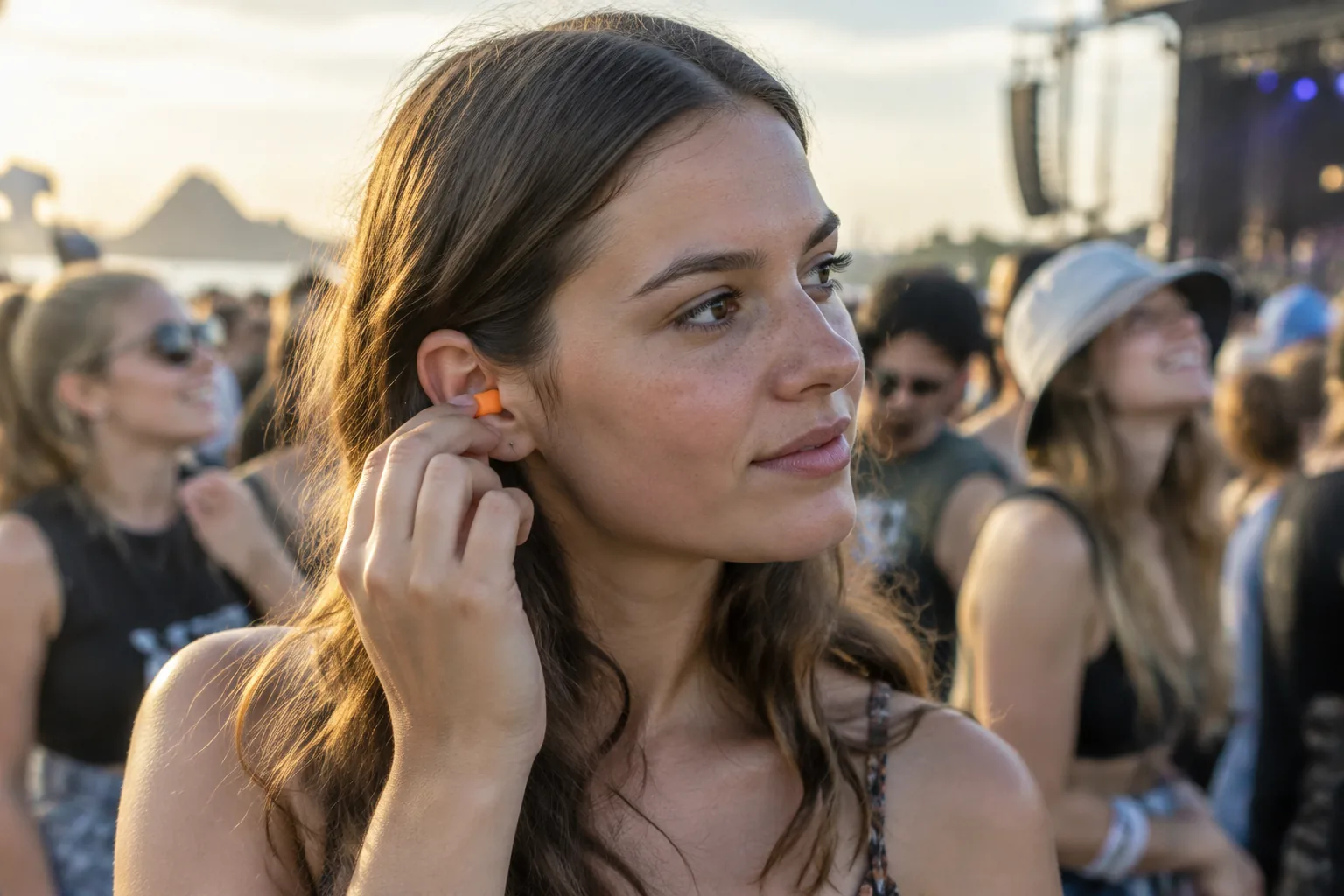
Loud events can reach levels where hearing is at risk within minutes. Australian workplace standards use 85 decibels averaged over eight hours as a reference point, and the time allowed drops quickly as noise rises. Earplugs, distance from speakers and listening breaks all help reduce your exposure. Hearing Help offers custom hearing protection; ask us how it works.
A great gig or a big game is part of life on the Redcliffe Peninsula. Loud noise is part of both. This guide explains what the official Australian information says about noise exposure, the main types of earplugs, and where custom hearing protection fits in.
How loud is too loud?
Sound is measured in decibels (dB). The scale is not a straight line: a small rise in decibels is a big rise in sound energy. Two pieces of Australian information help put numbers on it.
The workplace reference point. Safe Work Australia describes the exposure standard for noise in the model Work Health and Safety Regulations as an average of 85 dB(A) over eight hours, with a separate peak limit of 140 dB(C) for sudden, very loud sounds. That standard is written for workplaces, and it is described as protecting most, but not all, people.
The halving rule. The Safe Work Australia Code of Practice shows that every 3 dB increase doubles the sound energy, so the time you can spend at that level before reaching the same exposure is cut in half. At 88 dB(A), that is about four hours instead of eight.
What that means at events. The Australian Government's Protecting your hearing fact sheet gives examples of how little time is involved at music levels. It lists music at a concert at 103 dB with less than 8 minutes of listening without protection, and music through earphones at maximum volume (106 dB) with less than 4 minutes. It also lists riding a motorcycle at 97 dB (30 minutes) and using an electric drill at 94 dB (1 hour). Actual levels vary from venue to venue and from seat to seat.
Hearing Australia says the effects of noise are cumulative: the louder the noise and the longer you are around it, the greater the risk.
What does noise do to hearing?
According to the Australian Government's fact sheet, noise injury is damage to the sensitive structures of the inner ear that can result in hearing loss. It is caused by sounds that are too loud, or loud sounds that last a long time. Hearing Australia describes noise-induced hearing loss as irreversible but preventable.
If your hearing changes suddenly, or one ear feels blocked or muffled and does not recover, see your GP or go to an emergency department the same day. Please do not wait for it to pass. The same applies to sudden ringing in the ears.
How can you protect your hearing at a concert?
Hearing Australia and the Department of Health give practical steps you can use at most events:
- Know where the speakers are. Stand away from them. Distance reduces how loud the sound reaches your ears.
- Bring earplugs. Pack them before you leave, so you have them if you need them. Hearing Australia notes that disposable or reusable earplugs can significantly reduce the risk of noise-induced hearing damage.
- Try the raise-your-voice check. Hearing Australia says that if you have to raise your voice when standing 1 to 2 metres from someone, the noise is likely too loud.
- Take breaks. Hearing Australia suggests regular breaks outside, away from the sound source.
- Turn it down on your own devices. The Australian Government's fact sheet lists regular exposure to loud noise from headphones, speakers or power tools as a cause of noise injury. Hearing Australia suggests listening at no more than 60 per cent of maximum volume for no longer than 60 minutes at a time.
What about sport?
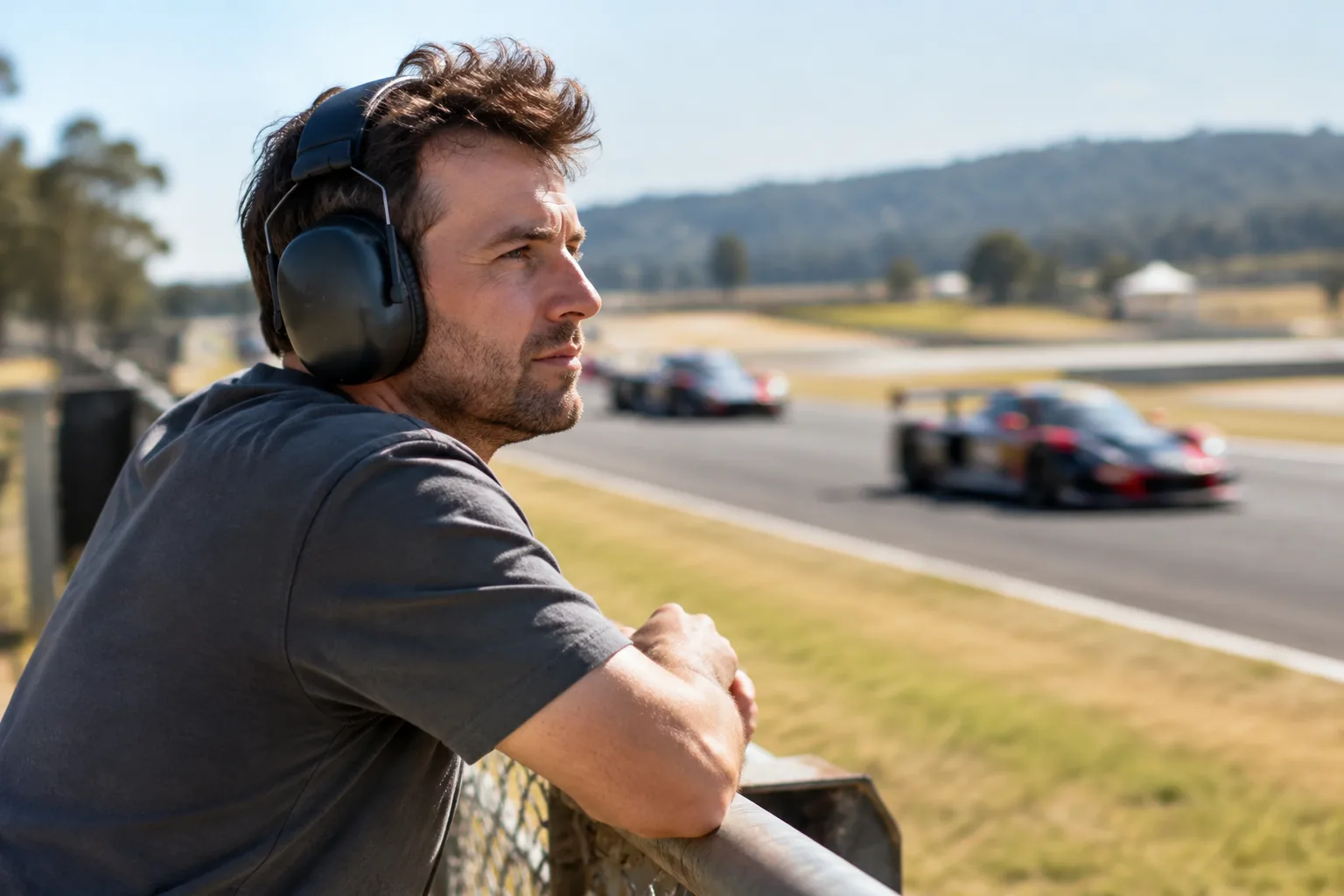
Sport has its own loud moments: the roar of a stadium crowd, the engines at a motor race, the crack of a rifle at a shooting range, or the buzz of power tools on a weekend. Hearing Australia lists motor sports among the higher-risk activities and says shooters should wear hearing protection at all times. The general principles apply:
- the louder the sound and the longer you are exposed, the greater the chance of harm
- distance from the noise source helps
- hearing protection helps most when it is worn consistently, not just for part of the time
The Australian Government's health website also suggests earmuffs when using power tools, and noise-reduction earplugs at loud events. If you take part in motor sport or shooting, or work or play near loud equipment, your event or club may have its own rules about protection. Check with them.
What types of earplugs are there?
For loud music, Hearing Australia suggests three types: disposable foam, silicon putty, or reusable earplugs specially designed for listening to music. Each has trade-offs, and the right choice depends on what you are doing.
Foam earplugs
These are the basic, widely available disposable type, and they are easy to carry. Follow the fitting instructions on the pack.
Silicon putty earplugs
These are another option Hearing Australia lists. Again, follow the instructions on the pack for fitting.
Reusable earplugs
Hearing Australia points to reusable earplugs that are specially designed for listening to music. If music is your main concern, ask for one made for that purpose and follow the manufacturer's instructions for use and care.
Custom-made earplugs
These are made to fit your ears specifically. Hearing Help provides custom ear plugs and hearing protection. Ask us when you book what is available and how the process works. Noise reduction varies by product, so ask the supplier for the rating of any plug you are considering.
How does fit change things?
A plug only protects you while it is in and fitted properly, and plugs that are taken out for part of the night reduce your overall protection.
If you wear foam or reusable plugs, follow the manufacturer's fitting instructions. If you are unsure whether you are fitting them properly, ask an audiologist.
Custom hearing protection at Hearing Help
Hearing Help offers custom ear plugs and hearing protection as a service. What is involved, how long it takes and what it costs are best confirmed with us when you book. Standard earplugs from a pack suit some situations, and your audiologist can talk through what is likely to suit what you do.
If you have ear pain or discharge, see your GP or go to an emergency department the same day. If you have a perforated eardrum, grommets, a current ear infection or recent ear surgery, see your GP or an ENT specialist before booking custom ear plugs.
Should you get your hearing checked?
The Australian Government's fact sheet notes that you can book directly with a hearing clinic without a referral.
If you notice a gradual change, such as difficulty following conversations in noise, book a hearing assessment. If you notice ringing in your ears that does not settle, see your GP.
Ready to talk it through?
If you would like to talk it through, book a hearing assessment with Erin at Hearing Help (Newport Marketplace). Erin has over 25 years as an audiologist, 17 of them serving the Redcliffe area. You can book online at www.hearinghelpredcliffe.com.au/booking-form/ or call 07 3214 3641.
Frequently asked questions
How loud is a concert?
Levels vary by venue and position. The Australian Government's Protecting your hearing fact sheet lists music at a concert at 103 dB, with less than 8 minutes of listening without protection.
Do earplugs ruin the sound of the music?
Some earplugs change how music sounds more than others. Hearing Australia points to reusable earplugs that are specially designed for listening to music, so ask for one made for that purpose. How they sound to you is best judged by trying them.
What are custom ear plugs?
Custom earplugs are made to fit your ears specifically. Hearing Help provides custom ear plugs and hearing protection. Ask us when you book how it works.
Are earplugs suitable for children at events?
For advice about hearing protection for a child, ask us when you book or see your GP.
What if my ears ring after a loud night?
Muffled hearing or ringing after a loud night is a reminder of how loud the noise was. If your hearing changes suddenly, see your GP or go to an emergency department the same day. If the ringing does not settle, see your GP.
Do I need a hearing test before getting custom protection?
Ask us when you book what is involved in getting custom protection, and whether a hearing assessment is part of it.