
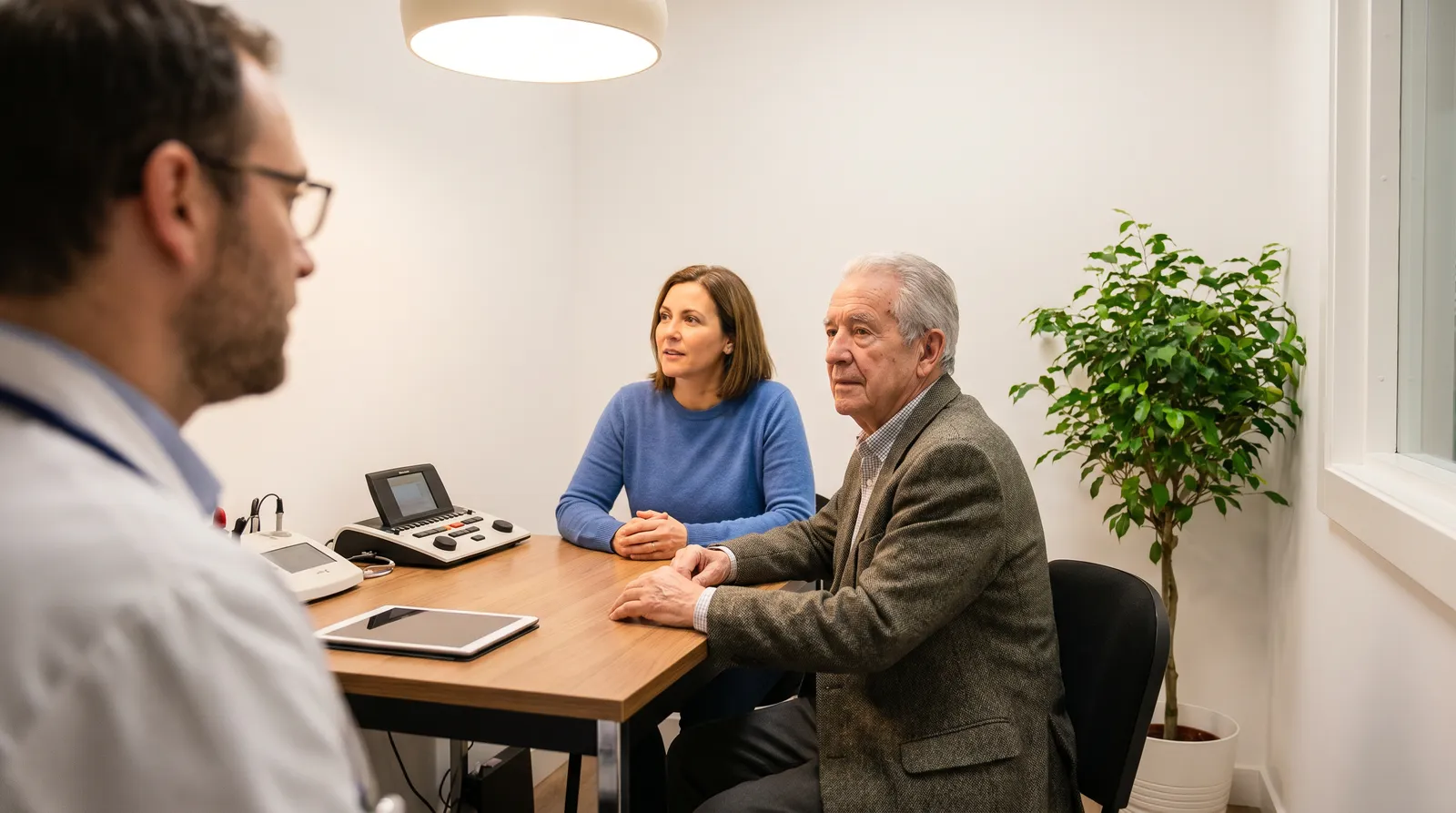
Looking for a hearing test and you live in Kippa-Ring? Hearing Help is an independent audiology clinic providing thorough diagnostic hearing assessments for adults across the Redcliffe Peninsula and Moreton Bay region — and we are here to help you understand your hearing clearly.
Hearing Assessment: More Than Just a Hearing Check
There is a meaningful difference between a quick hearing screening — the kind that might be offered at a community health fair or a pharmacy kiosk — and a full diagnostic hearing assessment. A screening can tell you whether a problem might exist. A comprehensive assessment tells you the specific nature and degree of any hearing loss, which frequencies are affected, how well you process speech, and what the likely cause might be.
For adults who want genuine information rather than a simple pass or fail, a full assessment is the appropriate starting point. That is what Hearing Help provides for Kippa-Ring residents and the broader Redcliffe Peninsula community.
The Hearing Assessment in Detail
A comprehensive hearing assessment at Hearing Help typically runs between 60 and 90 minutes and works through the following components.
Background interview. Your audiologist starts with a structured conversation covering your medical and hearing history, current medications, career history and noise exposure, and the day-to-day situations where hearing feels harder. This background does not just set context — it actively informs how your results are interpreted and what follow-up may be relevant.
Visual ear examination. Using an otoscope (a small lighted instrument), the audiologist examines each ear canal and eardrum. This identifies whether wax, debris, or a physical change to the eardrum might be contributing to any hearing difficulty.
Pure-tone audiometry. Wearing headphones in a quiet room, you listen for tones at a range of pitches and signal your responses. The audiologist uses your responses to determine the softest level at which you can detect each frequency — your hearing threshold. These are plotted on an audiogram.
Bone conduction testing. A small device placed behind the ear sends sound vibrations through the skull directly to the inner ear. By comparing air conduction and bone conduction results, the audiologist can determine whether any hearing loss is sensorineural (inner ear), conductive (outer or middle ear), or a mix of both.
Speech discrimination testing. You listen to a list of words at a comfortable volume and repeat them back. This is separate from the pure-tone test and measures how clearly you process speech, which is the most practically relevant aspect of hearing for day-to-day communication.
Tympanometry. A brief test of middle ear function using small pressure changes. It is quick and comfortable and tells the audiologist how efficiently your middle ear is working.
Results conversation. Your audiologist walks through every result with you — the audiogram, speech scores, and middle ear findings — in clear, everyday language, and answers all your questions before you leave.
Common Reasons People Book a Hearing Assessment
No two people come to a hearing assessment for exactly the same reason, but some patterns come up consistently. Kippa-Ring residents often describe situations like these when they call to book.
Some notice they are consistently missing parts of conversation — not all of it, but enough words that they find themselves nodding and hoping they understood correctly. Others have been told by a partner, adult child, or friend that the television is too loud, or that they need to be spoken to directly rather than from another room.
Some come in because of tinnitus — a ringing or other persistent sound in one or both ears — which often coexists with underlying hearing loss. Others have a history of working in noisy industries and want to know whether that exposure has had a measurable effect.
Whatever brings you to the assessment, the result is the same: clear, documented information about where your hearing sits right now.
The Australian Government Hearing Services Program
The Australian Government's Hearing Services Program offers eligible adults access to hearing assessments and, where appropriate, subsidised hearing devices at no or very low cost. Conditions apply under the Australian Government Hearing Services Program.
You may be eligible if you are an Australian citizen or permanent resident aged 26 or over and you hold a Pensioner Concession Card, a DVA Gold Card (or White Card for specific hearing-related conditions), or another qualifying Commonwealth concession card.
Hearing Help is a registered Hearing Services Program provider. When Kippa-Ring residents contact us to enquire, we will help confirm eligibility before the appointment so you know what to expect. This program removes one of the most common barriers to accessing professional hearing care.
After the Assessment — Your Options
The hearing assessment is a beginning, not a verdict. Here is what typically happens across the different outcomes.
Normal hearing: You receive a copy of your audiogram as a documented baseline. Future assessments can be compared against it, making it much easier to track any change over time.
Mild to moderate hearing loss: Your audiologist will explain the degree and type of loss, the likely impact on everyday listening, and the range of options available. Hearing aids are often discussed at this stage, with a focus on fitting the right technology to your specific audiogram, lifestyle, and communication priorities.
More significant loss or an atypical pattern: A referral to an ear, nose, and throat specialist may be appropriate. Your audiologist will explain why and help you understand what to expect from a specialist review.
Hearing Help is independently run and not affiliated with any specific hearing aid manufacturer, which means options are presented based on what suits the individual.
Frequently Asked Questions
Can tinnitus be assessed at the same appointment? Yes. If you experience tinnitus, your audiologist will include a tinnitus evaluation as part of the assessment. This may include matching the pitch and loudness of the tinnitus and assessing how much it affects daily functioning.
What if I have already had a hearing test elsewhere? You are welcome to bring any previous audiograms. Comparing past results with a new assessment can be informative and helps build a longitudinal picture of your hearing health.
How do I know which type of hearing aid would suit me? This is discussed thoroughly based on your audiogram, your lifestyle (activity level, work environment, hobbies), and your dexterity and vision if relevant. There is no one-size-fits-all recommendation.
Get in Touch
Kippa-Ring residents are welcome to contact Hearing Help to book a comprehensive hearing assessment. We are here with clear information, no pressure, and genuine care for your hearing health.