
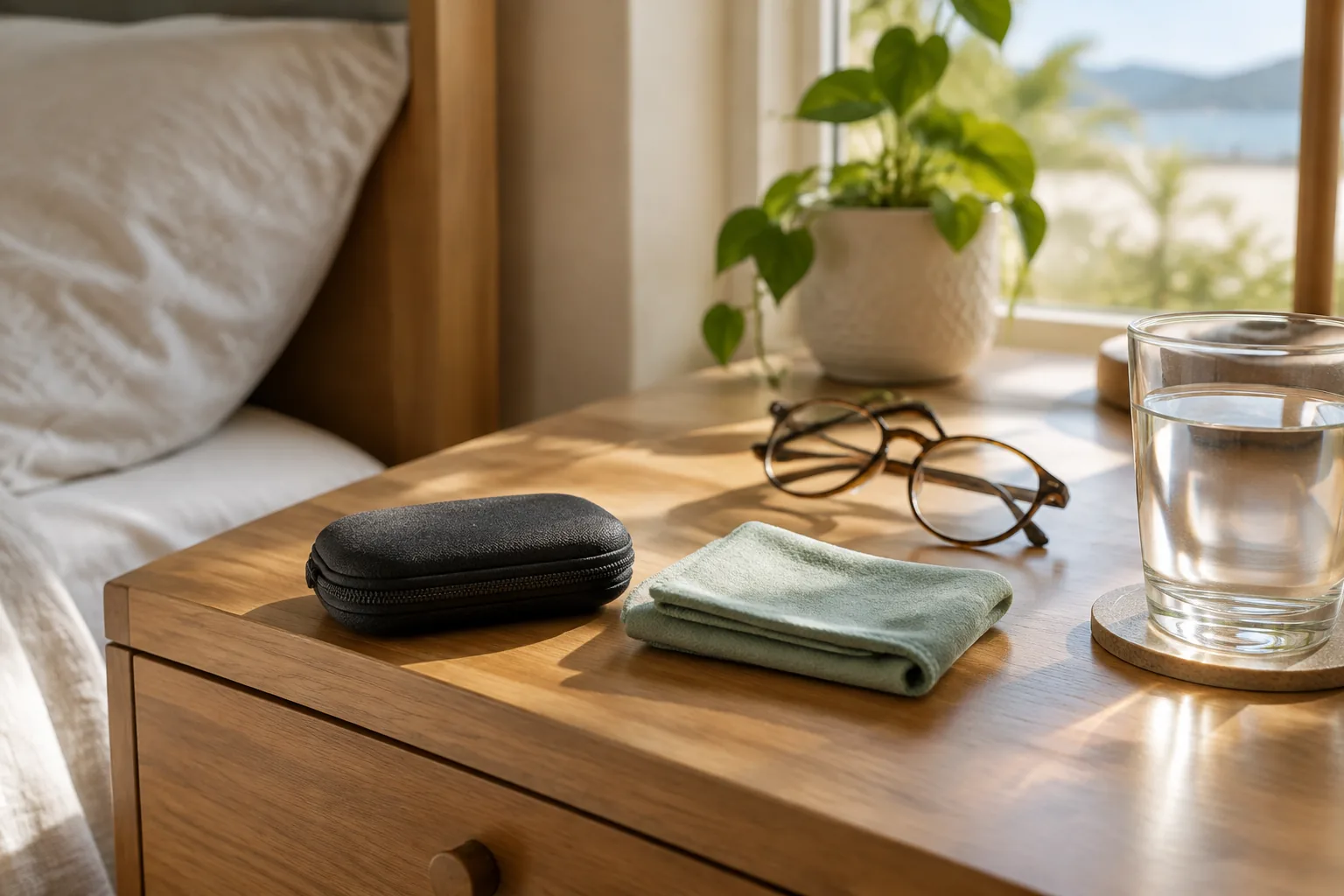
Hearing aids are small, they live in a warm and sometimes damp spot, and you probably wear them for most of your day. A few simple habits are part of looking after them, and they take only a minute or two.
This guide covers everyday care only. It is not about repairs, and it is not a replacement for the instructions that came with your aids. Every model is a little different, so your manual and your audiologist have the final say.
First, a few ground rules
- Follow your aids' own instructions. The care steps for a behind-the-ear aid, an in-the-ear aid and a rechargeable aid can all differ.
- Do not try to repair a problem yourself. Everyday care means wiping and storing your aids properly. It does not mean opening them up or poking at them with tools.
- If something is wrong, contact the clinic. We would much rather hear from you early.
This post is written for adults who wear hearing aids. Hearing Help fits hearing aids for adults only.
A simple daily routine
Hearing Australia's guide to taking care of your hearing aids suggests a few basics, and these suit most people.
Wipe them daily. Use a cleaning cloth and apply no pressure. Gentle is the key word.
Follow the cleaning steps in your manufacturer's booklet. Hearing aid servicing, repairs and cleaning are on our list of services; ask us what that covers.
Check the tubing or wire. If your aid has a tube or wire, have a look that it is not squashed, twisted or split.
Wipe off moisture. Use a tissue or a dry cloth to remove moisture.
Put them away properly. Hearing Australia advises keeping your aids in their case when you are not wearing them.
A good habit is to attach the routine to something you already do, such as when the aids come out for the night.

Keep water away
Hearing Australia is clear on this one:
- Never use running water on your hearing aids, and never immerse them.
- Do not wear them in the shower or in the rain.
If you are caught out in the rain or splashed, dry the outside with a tissue or dry cloth, and contact your clinic if the aid does not sound or work as usual.
Chemicals and products
Hearing Australia recommends taking your hearing aids out before you use:
- aftershave
- hairspray
- perfume
- sunscreen
- insect repellent
Their chemicals can damage the aids. Put these products on first, give them a moment, then put the aids in.
It is a small step to build into your morning routine.
Avoid extreme heat
Hearing Australia advises avoiding extreme heat. In practice, that means not leaving your aids in a hot parked car or in direct sun. Keep them in their case somewhere cool and dry.
Batteries and charging
If your aids go quiet, check the simple things first. Hearing Australia suggests checking whether the device needs recharging or a new battery. If your aids are rechargeable, make sure they are sitting properly in the charger. If you have followed your manual's battery or charging steps and there is still no sound, contact the clinic.
What not to do
- Do not use alcohol wipes, solvents or household cleaners unless your manufacturer's instructions say you can.
- Do not put anything in the tiny openings.
- Do not try to repair or reshape your aids. Cracks, loose parts and damaged casings should be looked at by the clinic.
- Do not put anything in your ears to deal with a build-up or a blockage. If you think wax may be involved, book an assessment.
When to contact the clinic
Hearing Australia says to contact your local hearing centre for help with cleaning or maintenance, and to replace an earmould that has become discoloured or hardened. If your aids have an earmould, book an appointment to talk about a new one.
You should also contact us if:
- the tubing is cracked or torn
- your aids sound different from usual, or have stopped working
- you hear whistling or buzzing that is new
- an aid is damaged, has been dropped, or has got wet
- the aids no longer feel comfortable to wear
Hearing aid servicing, repairs and cleaning are on our list of services; ask us what that covers.
When it is not the hearing aid
Sometimes the aids are working perfectly and the change is in your hearing or your ears. If you notice that your hearing has changed, book a hearing assessment.
If your hearing changes suddenly, see your GP or go to an emergency department the same day. For ear pain, discharge, bleeding or dizziness, see your GP or go to an emergency department the same day.
Your quick checklist
- Wipe daily with a cloth, no pressure
- Follow your manufacturer's cleaning steps
- Check tubing or wires
- Keep them dry and away from running water
- Take them out before sprays, sunscreen and repellent
- Store them in their case, away from heat
- Check the battery or charge if the sound drops
- Contact the clinic when something looks or sounds wrong
Looking after your aids is a small habit
Once it is part of your day, caring for your hearing aids takes very little time, and you will know your aids well enough to spot when something is not right.
If you'd like to talk it through, book a hearing assessment with Erin at Hearing Help (Newport Marketplace).