
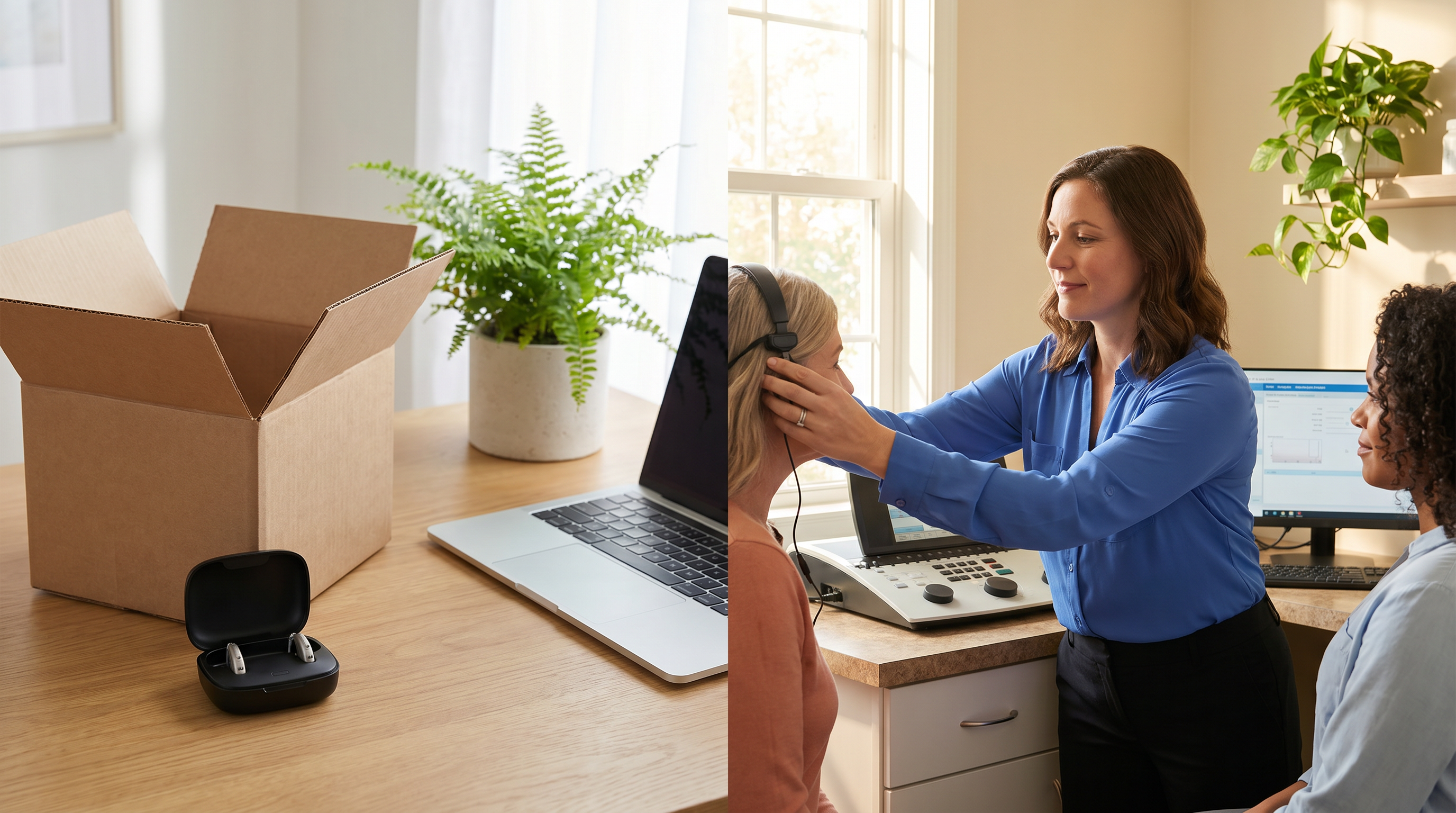
Scroll through any online marketplace or consumer tech site and you'll find hearing aids for a fraction of the price of devices supplied through an audiologist. Some are sold over the counter at pharmacies. Others arrive in sleek packaging with smartphone apps and five-star reviews. It's a reasonable question to ask: are these worth considering?
The honest answer is: it depends — on your hearing profile, your expectations, and how you define "worth it."
This article isn't here to dismiss online options entirely, nor to talk you out of seeking a professional assessment. The goal is to give you enough information to make a genuinely informed decision.
What Are OTC and Online Hearing Aids?
Over-the-counter (OTC) hearing aids are amplification devices sold without a prescription or professional fitting. They're widely available online and increasingly in pharmacies. The US market opened significantly to OTC devices in 2022, and similar products have made their way into the Australian consumer market.
These devices sit in a different regulatory category from prescription (or "fitted") hearing aids. In Australia, the Therapeutic Goods Administration (TGA) regulates hearing devices, but OTC-style devices often operate under different labelling or classification than clinically fitted aids.
Some products marketed as hearing aids are technically sound amplifiers — Personal Sound Amplification Products (PSAPs) — which are not classified as medical devices at all. It's worth understanding which category a product falls into before you buy.
What Online Devices Can Offer
There are genuine reasons why some people consider online or OTC options:
Lower upfront cost. This is the most obvious appeal. Consumer hearing devices can cost anywhere from $50 to several hundred dollars — compared with professionally fitted devices that can range from around $1,500 to $8,000 or more per pair.
Accessibility and convenience. For someone in a remote area, or someone who simply prefers to manage their own health independently, the ability to purchase and receive a device without clinic appointments is appealing.
Suitable for very mild difficulties. For someone who occasionally struggles to hear the television clearly, or finds group conversations slightly harder than they used to, a basic amplifier may provide some benefit in specific situations.
What Clinical Experience Suggests
There is another side to this, and it's worth understanding before purchasing.
Hearing loss is not one-size-fits-all. A professional hearing assessment produces an audiogram — a detailed map of how much hearing loss you have at different frequencies in each ear. Hearing aids supplied through a clinic are programmed specifically to your audiogram. An OTC device applies a generic amplification profile that may over-amplify some sounds and under-amplify others. For many people with moderate or significant hearing loss, this means the device simply doesn't work well in practice.
Amplification without diagnosis can mask other issues. Some causes of hearing difficulty — including infections, earwax build-up, or (less commonly) more serious conditions — benefit from medical assessment. Purchasing a device online without a hearing check means these possibilities are not investigated.
Fitting matters more than most people realise. How a device sits in the ear canal affects how sound is delivered. A poorly fitting device can cause discomfort, whistle or feedback, and in some cases be difficult to use consistently. Proper fitting, carried out by an audiologist using real-ear measurement and other tools, makes a measurable difference to how a device performs.
Aftercare is part of the value. A professionally fitted hearing aid comes with follow-up appointments for fine-tuning, cleaning, and adjustments as your hearing or needs change. Online purchases typically come with limited or no ongoing support. For a device you wear for most of your waking hours, aftercare is not a minor consideration.
A Framework for Thinking It Through
Here are some questions worth asking before deciding:
Have you had a professional hearing assessment? If not, this is a genuinely useful starting point regardless of what you decide next. Understanding the type and degree of your hearing difficulty gives you much better information to make any decision. Many clinics offer assessments at a reasonable cost, and eligible pensioners and veterans can access them through the Australian Government Hearing Services Program, which funds eligible assessments.
What are you trying to achieve? If you want to hear the television more clearly in a quiet room and your hearing loss is mild, a lower-cost device may provide some benefit. If you want to follow conversations in noisy restaurants, hear speech clearly on the phone, and manage different listening environments throughout the day — that's a much more complex ask, and the gap between consumer devices and professionally fitted aids typically widens.
What's your budget for the long term? A $150 device that sits in a drawer within six months because it's uncomfortable or ineffective isn't a saving. If you're eligible for the Hearing Services Program, professionally fitted devices may cost you nothing, which changes the comparison considerably.
What support do you have available? For older Australians or those less comfortable with technology, setting up and adjusting an app-controlled device independently can be challenging. An audiologist provides hands-on guidance and an ongoing relationship, which some people find invaluable.
Frequently Asked Questions
Are online hearing aids legal in Australia? Many are, yes — though the regulatory category varies. PSAPs are consumer products; some OTC hearing aids are listed on the ARTG (Australian Register of Therapeutic Goods). Check what category any device falls into before purchasing.
Can an audiologist programme a device I bought online? Some audiologists will work with devices purchased elsewhere; many will not, particularly if they don't have access to the manufacturer's programming software. It's worth asking before you buy.
If I try an online device and it doesn't help, can I still see an audiologist? Absolutely. A lot of people come to clinics after an unsatisfactory experience with a consumer device. A proper assessment will tell you what's actually happening with your hearing and what may genuinely help.
What if I can't afford professionally fitted hearing aids? Cost is a real concern, and it's worth exploring your options before assuming professional care is out of reach. The Hearing Services Program assists eligible pensioners and veterans. Private health insurance extras cover sometimes contributes. Some clinics offer payment plans. Your audiologist can discuss what options are available.
The Bottom Line
Online and OTC hearing devices suit some people in some situations. For others — particularly those with moderate to significant hearing loss, or those who need reliable hearing across varied environments — a professionally assessed, fitted, and supported device is likely to be a better long-term option.
The most useful first step, whatever you decide, is to understand your own hearing. If you're based on the Redcliffe Peninsula or in the Moreton Bay region and you'd like a straightforward conversation about where you stand, the team at Hearing Help is here to help — no pressure, just clarity.